Buy small-business.eu ?
We are moving the project
small-business.eu .
Are you interested in purchasing the domain
small-business.eu ?
domain@kv-gmbh.de · 0541-91531010
Buy small-business.eu ?
Why is the throwing distance x independent of the local factor of gravitational acceleration?
The throwing distance x is independent of the local factor of gravitational acceleration because the horizontal motion of the projectile is not affected by gravity. When an object is thrown horizontally, its initial velocity only affects its horizontal motion, while gravity only affects its vertical motion. Therefore, the distance the object travels horizontally is not influenced by the local gravitational acceleration. As a result, the throwing distance x remains constant regardless of the local factor of gravitational acceleration. **
How can one disable mouse acceleration on startup?
To disable mouse acceleration on startup, you can create a startup script that runs the necessary commands to disable mouse acceleration. On Windows, you can create a .bat file that contains the command to disable mouse acceleration and add it to the startup folder. On Linux, you can create a shell script that runs the necessary commands and add it to the startup applications. By doing this, the script will run automatically when the system starts up, ensuring that mouse acceleration is disabled from the beginning. **

Similar search terms for Acceleration
Top-Angebote
Products related to Acceleration:
-
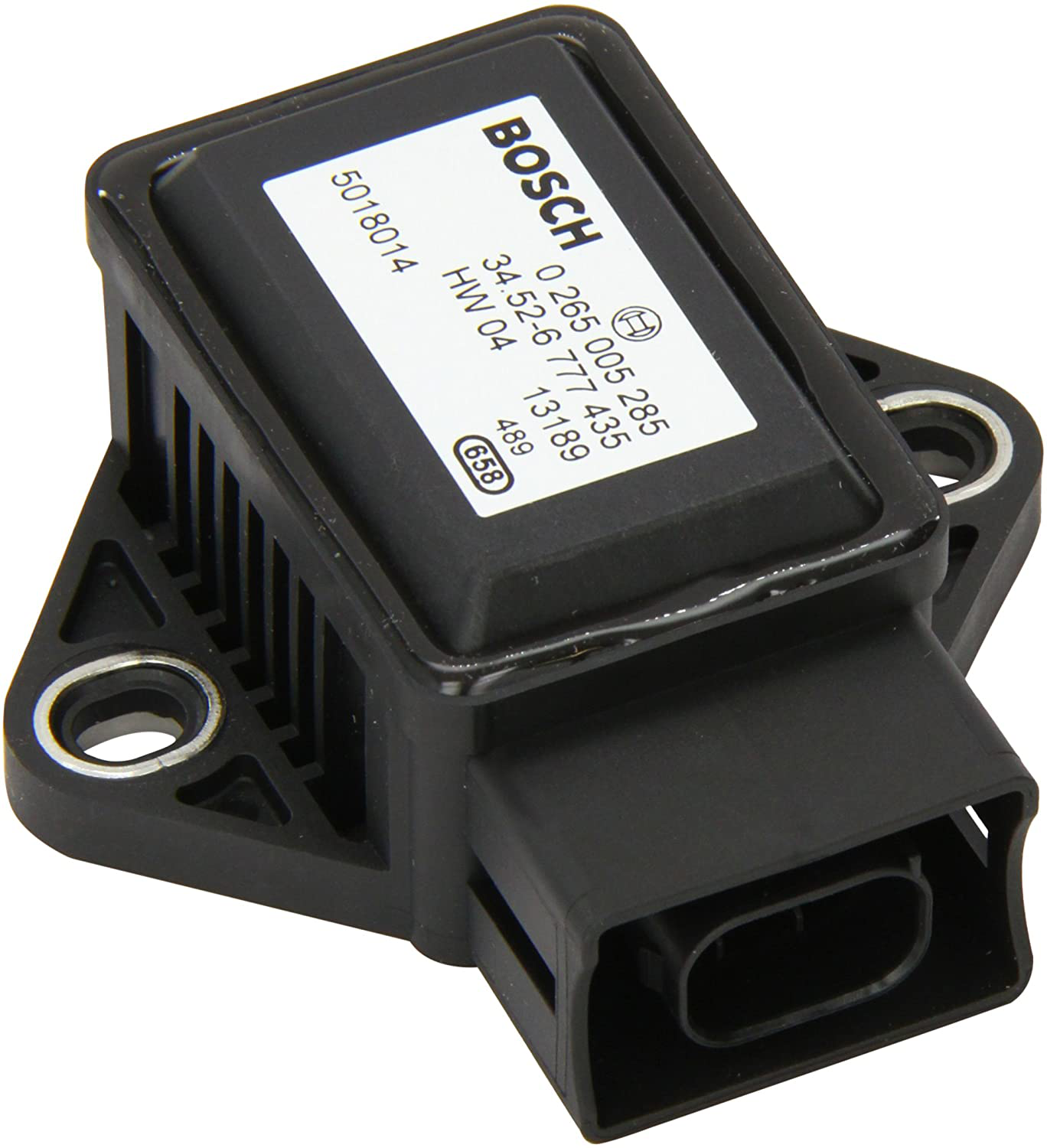
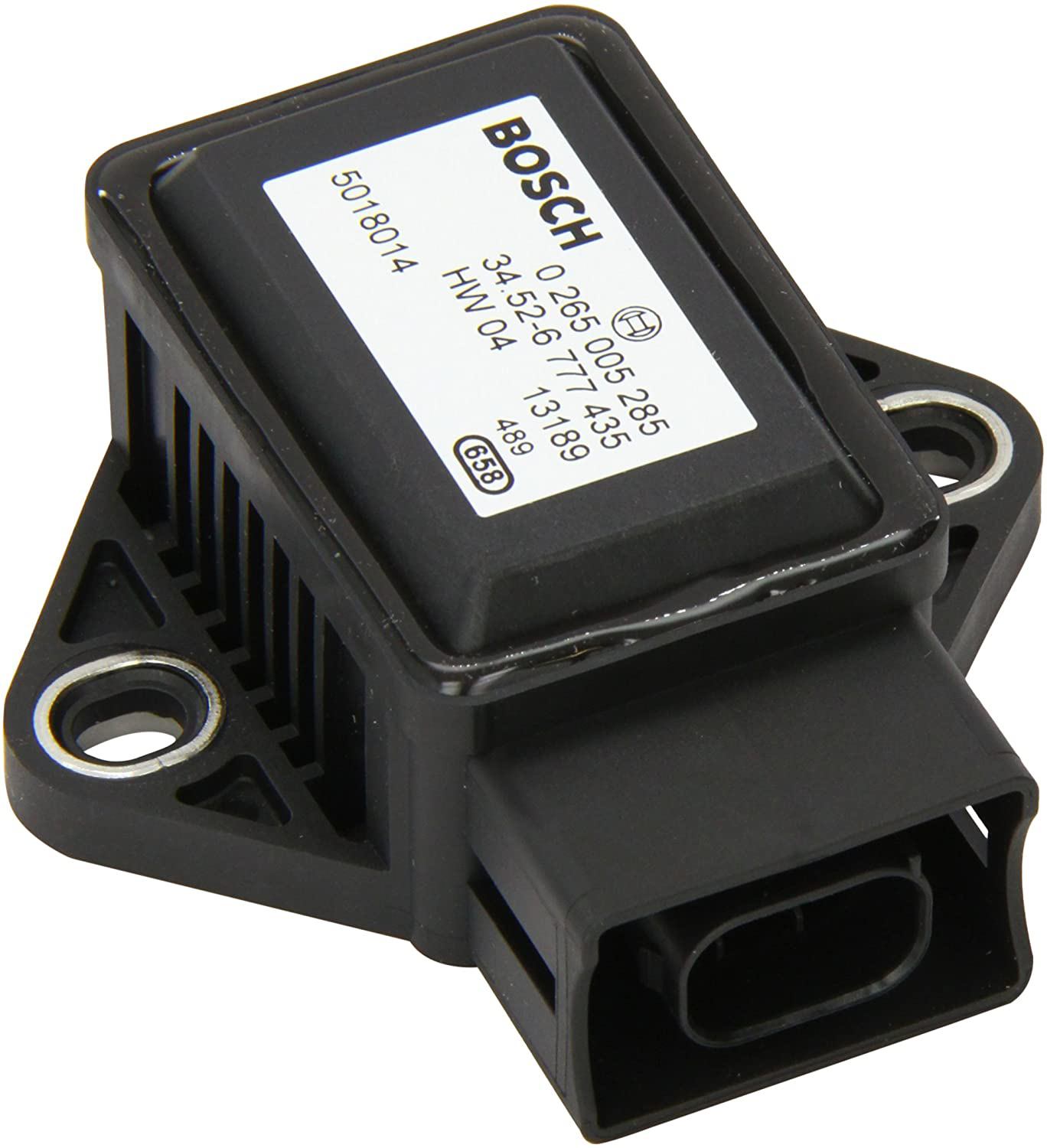
METZGER 09001553 Sensor, longitudinal- / lateral accelerationFitting Position: lateral installation; Fitting Position: C-Pillar, Rear, Front, B-Pillar, Front and Rear; Sensor Type: Crash Sensor; Airbag: for side airbag; Production date from: 26.05.2014, 03.11.2014, 25.05.2015; Number of Doors: 4; for PR number: 4X1, 0A2; Production date to: 03.02.202060,99 £*Shipping: 8,45 £Secure redirect to the provider



-
Is the local factor the same as acceleration?
No, the local factor is not the same as acceleration. The local factor refers to the specific conditions or characteristics of a particular area or region that may affect a situation or outcome. Acceleration, on the other hand, is a physical quantity that represents the rate of change of velocity of an object with respect to time. While the local factor may influence acceleration, they are distinct concepts. **
-
How can one convert acceleration to Earth acceleration?
To convert acceleration to Earth acceleration, one can use the formula: Earth acceleration = acceleration / 9.81 m/s^2. This formula is derived from the fact that Earth's gravitational acceleration is approximately 9.81 m/s^2. By dividing the given acceleration value by 9.81 m/s^2, one can determine how many times greater or smaller the acceleration is compared to Earth's gravitational acceleration. This conversion is useful for comparing accelerations in different contexts to the standard acceleration due to gravity on Earth. **
-
How can one convert acceleration to Earth's acceleration?
To convert acceleration to Earth's acceleration, one can simply divide the given acceleration by the acceleration due to gravity on Earth, which is approximately 9.81 m/s^2. This will give the acceleration in terms of how many times Earth's gravity it is. For example, if a car is accelerating at 5 m/s^2, dividing this by 9.81 m/s^2 will give approximately 0.51 g, where g represents Earth's acceleration due to gravity. **
-
What is the difference between gravitational acceleration and Earth's acceleration?
Gravitational acceleration is the acceleration experienced by an object due to the force of gravity, which is approximately 9.81 m/s^2 on the surface of the Earth. Earth's acceleration, on the other hand, refers to the acceleration of the Earth itself as it orbits the Sun, which is approximately 9.81 m/s^2 towards the Sun. In essence, gravitational acceleration is the acceleration experienced by objects on Earth due to gravity, while Earth's acceleration is the acceleration of the Earth as it moves through space. **


What is the difference between tangential acceleration and rotational acceleration?
Tangential acceleration is the acceleration of an object moving in a circular path, and it is directed along the tangent to the path. It is caused by a change in the object's speed or direction. On the other hand, rotational acceleration is the rate of change of angular velocity of an object rotating around an axis. It is caused by a torque or force acting on the object, and it is directed perpendicular to the plane of rotation. In summary, tangential acceleration is related to linear motion in a circular path, while rotational acceleration is related to the change in the rate of rotation of an object. **
What is the formula for acceleration in uniform acceleration in physics?
The formula for acceleration in uniform acceleration in physics is given by a = (v - u) / t, where a is the acceleration, v is the final velocity, u is the initial velocity, and t is the time taken. This formula represents the change in velocity over time, and it is used to calculate the rate at which an object's velocity is changing. Acceleration is measured in meters per second squared (m/s^2). **
Top-Angebote
Products related to Acceleration:
-
METZGER 09001552 Sensor, longitudinal- / lateral accelerationFitting Position: lateral installation; Fitting Position: Front and Rear, C-Pillar, Rear, Front; Sensor Type: Crash Sensor; Airbag: for side airbag; for PR number: 4X1, 4X3, 0A2; Production date from: 31.05.2010; Production date to: 26.05.2014, 03.11.2014, 03.02.2020, 01.06.2020, 30.11.2015; Model Year to: 2014; Number of Doors: 4; Vehicle Identification Number (VIN) from: 2K-B-200 00160,99 £*Shipping: 8,45 £Secure redirect to the provider
-
METZGER 09001553 Sensor, longitudinal- / lateral accelerationFitting Position: lateral installation; Fitting Position: C-Pillar, Rear, Front, B-Pillar, Front and Rear; Sensor Type: Crash Sensor; Airbag: for side airbag; Production date from: 26.05.2014, 03.11.2014, 25.05.2015; Number of Doors: 4; for PR number: 4X1, 0A2; Production date to: 03.02.202060,99 £*Shipping: 8,45 £Secure redirect to the provider
-
Why is the throwing distance x independent of the local factor of gravitational acceleration?
The throwing distance x is independent of the local factor of gravitational acceleration because the horizontal motion of the projectile is not affected by gravity. When an object is thrown horizontally, its initial velocity only affects its horizontal motion, while gravity only affects its vertical motion. Therefore, the distance the object travels horizontally is not influenced by the local gravitational acceleration. As a result, the throwing distance x remains constant regardless of the local factor of gravitational acceleration. **
-
How can one disable mouse acceleration on startup?
To disable mouse acceleration on startup, you can create a startup script that runs the necessary commands to disable mouse acceleration. On Windows, you can create a .bat file that contains the command to disable mouse acceleration and add it to the startup folder. On Linux, you can create a shell script that runs the necessary commands and add it to the startup applications. By doing this, the script will run automatically when the system starts up, ensuring that mouse acceleration is disabled from the beginning. **
-
Is the local factor the same as acceleration?
No, the local factor is not the same as acceleration. The local factor refers to the specific conditions or characteristics of a particular area or region that may affect a situation or outcome. Acceleration, on the other hand, is a physical quantity that represents the rate of change of velocity of an object with respect to time. While the local factor may influence acceleration, they are distinct concepts. **
-
How can one convert acceleration to Earth acceleration?
To convert acceleration to Earth acceleration, one can use the formula: Earth acceleration = acceleration / 9.81 m/s^2. This formula is derived from the fact that Earth's gravitational acceleration is approximately 9.81 m/s^2. By dividing the given acceleration value by 9.81 m/s^2, one can determine how many times greater or smaller the acceleration is compared to Earth's gravitational acceleration. This conversion is useful for comparing accelerations in different contexts to the standard acceleration due to gravity on Earth. **
Similar search terms for Acceleration
-
Harper Business Smart Startups: What Every Entrepreneur Needs to Know by Catalina Daniels & James H. Sherman - Hardback - Business & Entrepreneurship Non FictionSmart Startups: What Every Entrepreneur Needs to Know is a candid guide to building a company that lasts. Written by two Harvard Business School classmates turned founders and angel investors, it goes beyond classroom theory to show what actually happens inside eighteen startups launched by fellow HBS graduates. Packed with honest case studies, hard-won lessons, and unexpected pitfalls, this book is essential reading for anyone serious about turning an idea into a viable business. The authors, Catalina Daniels and James H. Sherman, met as classmates at Harvard Business School, where they studied the fundamentals of entrepreneurship together. Years later, after each had founded and exited multiple companies and become active angel investors, they discovered that their real-world experiences often diverged sharply from the conventional wisdom they learned in school.11,99 £*Shipping: 2,99 £Secure redirect to the provider
-
How can one convert acceleration to Earth's acceleration?
To convert acceleration to Earth's acceleration, one can simply divide the given acceleration by the acceleration due to gravity on Earth, which is approximately 9.81 m/s^2. This will give the acceleration in terms of how many times Earth's gravity it is. For example, if a car is accelerating at 5 m/s^2, dividing this by 9.81 m/s^2 will give approximately 0.51 g, where g represents Earth's acceleration due to gravity. **
-
What is the difference between gravitational acceleration and Earth's acceleration?
Gravitational acceleration is the acceleration experienced by an object due to the force of gravity, which is approximately 9.81 m/s^2 on the surface of the Earth. Earth's acceleration, on the other hand, refers to the acceleration of the Earth itself as it orbits the Sun, which is approximately 9.81 m/s^2 towards the Sun. In essence, gravitational acceleration is the acceleration experienced by objects on Earth due to gravity, while Earth's acceleration is the acceleration of the Earth as it moves through space. **
-
What is the difference between tangential acceleration and rotational acceleration?
Tangential acceleration is the acceleration of an object moving in a circular path, and it is directed along the tangent to the path. It is caused by a change in the object's speed or direction. On the other hand, rotational acceleration is the rate of change of angular velocity of an object rotating around an axis. It is caused by a torque or force acting on the object, and it is directed perpendicular to the plane of rotation. In summary, tangential acceleration is related to linear motion in a circular path, while rotational acceleration is related to the change in the rate of rotation of an object. **
-
What is the formula for acceleration in uniform acceleration in physics?
The formula for acceleration in uniform acceleration in physics is given by a = (v - u) / t, where a is the acceleration, v is the final velocity, u is the initial velocity, and t is the time taken. This formula represents the change in velocity over time, and it is used to calculate the rate at which an object's velocity is changing. Acceleration is measured in meters per second squared (m/s^2). **
* All prices are inclusive of VAT and, if applicable, plus shipping costs. The offer information is based on the details provided by the respective shop and is updated through automated processes. Real-time updates do not occur, so deviations can occur in individual cases. ** Note: Parts of this content were created by AI.